
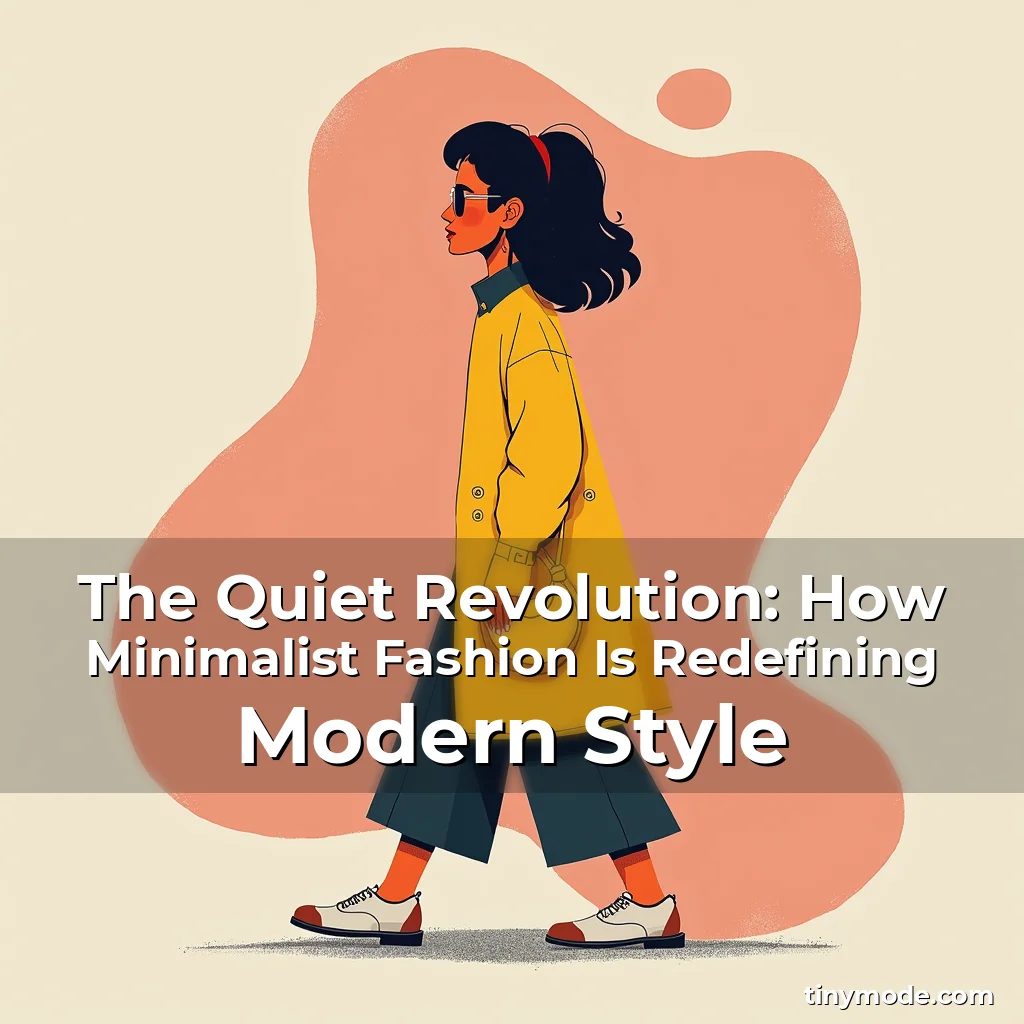
The Quiet Revolution: How Minimalist Fashion Is Redefining Modern Style
In an era dominated by fast fashion and ever-changing trends, minimalist fashion has emerged as a powerful counterpoint—a movement that champions simplicity, intentionality, and timeless elegance.
This philosophy isn’t just about wearing fewer clothes; it’s a lifestyle choice rooted in mindfulness and conscious consumption. For the Tinymode community and style enthusiasts seeking authenticity, minimalism offers a refreshing alternative to the noise of consumer culture.
The Core Principles of Minimalist Fashion
At its heart, minimalist fashion rejects excess in favor of clean lines, neutral palettes, and versatile silhouettes. These principles create a foundation for building a wardrobe that feels both cohesive and enduring.
The emphasis on quality over quantity ensures every piece serves a purpose. A well-crafted blazer or a perfectly tailored dress becomes a staple rather than a fleeting trend.
- Timeless Design: Minimalist clothing avoids logos, bold patterns, and seasonal fads, focusing instead on classic cuts and understated aesthetics.
- Neutral Color Palettes: Monochromatic schemes and muted tones allow garments to blend seamlessly, creating effortless versatility in outfits.
Why Minimalism Resonates in Today’s World
The rise of minimalist fashion coincides with growing concerns about sustainability, mental health, and digital overload. People are reevaluating what they truly need versus what they’re encouraged to desire.
This shift reflects broader societal movements toward decluttering physical spaces and simplifying life choices. In fashion, it translates to curating wardrobes that reduce stress and promote confidence through consistency.
A Statistical Snapshot of Consumer Behavior
According to a 2023 report by the Global Fashion Exchange, consumers who embrace minimalist fashion spend up to 60% less time deciding what to wear daily compared to their peers. This efficiency contributes significantly to reduced decision fatigue.
Furthermore, studies show that individuals with smaller, curated wardrobes report higher levels of satisfaction with their personal style, suggesting that minimalism fosters deeper connections with clothing choices.
Building Your Minimalist Wardrobe: Practical Steps
Creating a minimalist wardrobe begins with assessing your current collection and identifying pieces that align with your values and lifestyle. This process requires honesty and patience.
Focus on acquiring items that offer multifunctional use—such as a white t-shirt that transitions from day to night or jeans that pair effortlessly with nearly anything in your closet.
- Invest in Basics: Prioritize high-quality essentials like tees, sweaters, and trousers that form the backbone of your wardrobe.
- Leverage Layering Techniques: Neutral base layers open doors to endless outfit combinations, reducing reliance on accessory-heavy ensembles.
The Psychological Benefits of Simplified Styling
Minimalist fashion alleviates the pressure to constantly update one’s look according to external standards. Instead, it empowers individuals to define their own sense of style based on comfort and self-expression.
By eliminating clutter in both appearance and shopping habits, people often experience improved mental clarity and increased productivity. This alignment between inner peace and outer presentation is transformative.
Case Study: The Impact on Daily Life
Kelly Chen, a marketing professional in San Francisco, shared her journey transitioning to minimalist fashion. She reported saving over $2,000 annually by buying fewer clothes and spending less time on laundry and dry cleaning.
Mental health improvements were equally significant—Kelly noted feeling “lighter” mentally after streamlining her wardrobe, which helped manage anxiety related to work deadlines and social obligations.
Sustainable Living Through Minimalist Choices
Beyond aesthetic appeal, minimalist fashion supports ecological responsibility. By purchasing fewer items and prioritizing durability, consumers contribute to lowering textile waste and carbon footprints.
Ethical brands specializing in sustainable materials further enhance this commitment, offering alternatives made from organic cotton, recycled polyester, and Tencel derived from eucalyptus trees.
- Reduced Consumption Cycle: Owning fewer clothes naturally extends the lifespan of each garment, promoting longevity over disposability.
- Supporting Ethical Brands: Choosing companies transparent about labor practices and environmental policies reinforces positive change within the industry.
Navigating Challenges in Adopting Minimalism
Despite its many advantages, embracing minimalist fashion may feel daunting at Overcoming these hurdles demands awareness and gradual implementation.
Cultivating a mindset centered around gratitude helps maintain motivation during periods of adjustment. Appreciating existing possessions makes resisting impulsive purchases easier over time.
- Set Realistic Goals: Begin small by designating one season to simplify your wardrobe incrementally rather than making drastic changes overnight.
- Create Non-Negotiable Rules: Establish boundaries such as limiting annual clothing purchases to 30 items or investing only in pieces you’d wear monthly.
Styling Tips for Everyday Minimalists
To master minimalist styling, experiment with textures and proportions while maintaining a streamlined silhouette. Mixing fabrics like wool blends with soft knits adds depth without visual chaos.
Accessories play a subtle role—opt for simple leather belts, understated jewelry, and minimalist handbags that complement rather than overshadow your outfit.
- Play With Proportions: Balance oversized tops with fitted bottoms or vice versa to add dimension to otherwise flat looks.
- Embrace Monochrome: Wearing different shades of the same color creates sophistication while reinforcing the minimalist ethos of unity through variation.
Minimalism Across Cultures: Global Perspectives
While Western interpretations dominate mainstream discourse, minimalist fashion exists globally in diverse forms influenced by local traditions and climates. Japanese wabi-sabi, Scandinavian hygge, and Mediterranean simplicity reflect universal human desires for calmness and order.
These regional variations demonstrate that minimalism adapts beautifully across cultures, proving it isn’t confined by geography but enhanced by it. Understanding these nuances enriches our appreciation of global fashion landscapes.
Future Trends Shaping Minimalist Fashion
As technology advances, innovations like AI-powered virtual try-ons could democratize access to minimalist styles by helping shoppers find perfect fits without needing extensive in-store browsing experiences.
Meanwhile, circular economy models—where garments are designed for easy repair, reuse, or recycling—are gaining traction among eco-conscious designers aiming to extend product lifespans indefinitely.
- Digital Integration: Smart mirrors and AR applications enable real-time feedback on outfit suitability, encouraging thoughtful selections aligned with minimalist ideals.
- Upcycling Movement: DIY communities flourish online, sharing tutorials on transforming old clothes into new creations that embody creative minimalism.
Conclusion
Minimalist fashion transcends mere aesthetics—it represents a holistic approach to living intentionally, sustainably, and authentically. Its appeal lies in empowering individuals to reclaim control over their identities beyond superficial appearances.
To begin your minimalist journey, start by auditing your wardrobe, setting clear intentions, and gradually incorporating intentional choices into your routine. Remember, true transformation happens slowly yet surely when guided by conviction rather than impulse.